



For körperpeeling trockene haut in 2026, the best overall choice is a soft washcloth used with light pressure. Feuerstein Essentials Face & Body Scrub is the best fit if you want a dedicated face-and-body scrub; a lactic-acid body exfoliant is the better option if you want to avoid rubbing. None replaces moisturiser after washing.
- For körperpeeling trockene haut, a soft washcloth wins on control: you decide how much pressure to apply.
- Feuerstein Essentials Face & Body Scrub is the dedicated option for people who want one face-and-body product.
- Choose a lactic-acid body exfoliant if you want exfoliation without rubbing, but check the formula before use.
- If skin is cracked, stinging or inflamed, skip exfoliation and focus on gentle washing and moisturising.
Why This Matters
Dry skin does not always need more exfoliation. Roughness can reflect surface buildup, but tightness or stinging after washing calls for a gentler routine, not a stronger scrub. The best exfoliator for dry skin is the one you can use without leaving skin more uncomfortable.
That distinction matters when shopping in 2026. A scrub, a washcloth and a leave-on acid all remove or loosen surface skin differently. Their names do not tell you whether your skin will tolerate them. Start by deciding whether you need a dedicated product, direct control over rubbing or a method that avoids rubbing altogether.
What makes the best body exfoliator for dry skin?
- Control: Can you reduce pressure or stop as soon as skin feels uncomfortable?
- Application method: Does the option rely on rubbing, or can it work without friction?
- Clear use case: Is it intended for the body, the face and body, or a specific area?
- Formula check: Can you review the ingredient list and directions before applying it?
- Aftercare: Can you follow it with a moisturiser that suits your skin?
- Practical limits: Does the method still make sense when skin is cracked, inflamed or stinging? For those conditions, the answer is to pause exfoliation.
These criteria put pressure control ahead of promises about smoothness. They also keep a face-and-body scrub distinct from a body-only leave-on product: the two options solve different problems.
At a glance: the best options for dry skin in 2026
| Option | Best for | Standout feature | Key limitation |
|---|---|---|---|
| Soft washcloth | Direct control over pressure | You control each pass | Rubbing too hard can irritate dry skin |
| Feuerstein Essentials Face & Body Scrub | One dedicated face-and-body scrub | Face-and-body positioning; 200 ml size | The product name does not establish how reactive skin will tolerate it |
| Lactic-acid body exfoliant | Exfoliating without rubbing | Leave-on application rather than manual scrubbing | Formula strength and tolerability vary by product |
The ranking is a decision tree, not a claim that one method works for every dry-skinned person. If your skin stings before you begin, choose none of the three until it feels comfortable again.
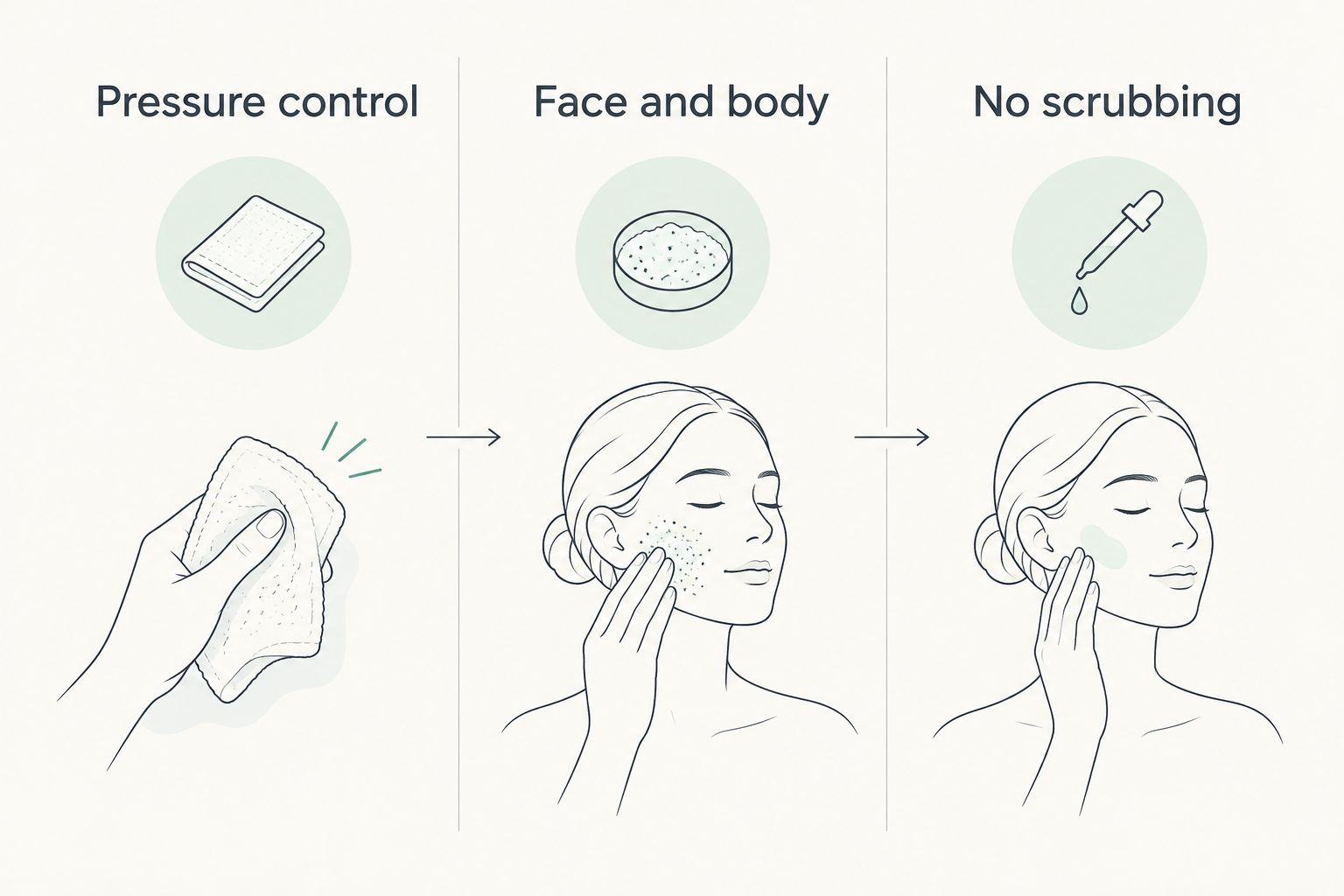
1. Soft washcloth: best body exfoliator for pressure control
Best for: Someone who wants to decide exactly how much physical exfoliation happens. A soft washcloth gives you direct control: you can use a light touch on rough areas and leave uncomfortable areas alone. Its main advantage for dry skin is not that it exfoliates more; it is that you can stop immediately.
Wet the cloth and use it gently on skin that is not cracked or inflamed. Do not treat redness as proof that the method is working. If ordinary washing already leaves your skin tight, a separate exfoliating step is not the priority.
Soft washcloth pros:
- Pressure and coverage stay in your hands.
- You can avoid areas that already sting.
- You do not have to assess a new exfoliating formula.
Soft washcloth cons:
- It is easy to rub harder than intended.
- It does not suit skin that is cracked or inflamed.
- It adds a step to washing without adding moisture.
A washcloth earns the overall spot because its intensity is easiest to control, not because it guarantees a better result than a product. Verdict: Buy a soft washcloth if you want a manual method and can keep the pressure light; skip the exfoliating step when skin feels sore.
2. Feuerstein Essentials Face & Body Scrub: best for dual use
Best for: Someone shopping for one dedicated scrub positioned for both face and body. The listed 200 ml product has that use case in its name. Feuerstein Essentials sells Swiss-made skincare with Engadine herbal ingredients, but those brand facts do not establish the scrub’s exfoliating particles, active ingredients or suitability for every type of dry skin.
Check the product’s current ingredient list and directions before using it. A product described for both face and body still calls for care on the face, where you should not assume that the pressure you use on your arms will feel comfortable. If a small application stings, wash it off and do not continue exfoliating that area.
Feuerstein Essentials Face & Body Scrub pros:
- It is explicitly positioned as a face-and-body scrub.
- It is a dedicated product rather than an improvised tool.
- The listed product size is 200 ml.
Feuerstein Essentials Face & Body Scrub cons:
- Its name does not reveal the full formula or exfoliating texture.
- Face-and-body positioning is not proof that reactive skin will tolerate it.
- As a scrub, it is not the first choice when you want to avoid rubbing.
This is the clearest product pick in the list for a shopper who specifically wants a scrub rather than a technique or a leave-on acid. It is not the automatic pick for skin that is already irritated. Verdict: Hold until you have checked the current formula and directions against your own skin’s needs; choose it if dual use remains the deciding factor.
3. Lactic-acid body exfoliant: best for avoiding friction
Best for: Someone who wants an exfoliating step without physically scrubbing. A lactic-acid body product is a different category from a washcloth or grain-based scrub: you apply the product rather than relying on repeated rubbing to do the work. That distinction makes it relevant when friction is your main objection.
Do not select a formula by the acid name alone. Products differ in their full ingredient lists, directions and intended areas of use. Choose one explicitly intended for the body, follow its label and stop if skin becomes uncomfortable. Do not apply an exfoliating acid to cracked or inflamed skin.
Lactic-acid body exfoliant pros:
- Application does not require repeated scrubbing.
- It gives you an alternative when manual exfoliation is uncomfortable.
- Body-specific labelling helps separate it from facial products.
Lactic-acid body exfoliant cons:
- Tolerability depends on the specific formula.
- It can still sting dry or irritated skin.
- It is not a substitute for moisturiser.
A leave-on acid solves the friction problem, not every cause of dryness. Verdict: Hold until you have checked a body-specific product’s directions and know your skin tolerates it; skip it when skin is cracked or stinging.
How to use an exfoliator without making dryness worse
Start with the condition of your skin, not the calendar. If washing causes stinging, pause exfoliation. If skin feels comfortable but looks rough, choose one method and keep the application gentle. Adding a scrub, a washcloth and an acid to the same routine makes it harder to identify what caused discomfort.
After washing, use a moisturiser that suits your skin. Feuerstein Essentials lists a 250 ml body lotion as one body-care option; its name and size do not tell you whether its formula suits your particular skin. Review the current ingredients if you know you react to specific components.
For a practical first pass in 2026, use this sequence:
- Check the skin: Leave cracked, inflamed or stinging patches alone.
- Choose one method: Pick pressure control, a dedicated scrub or no-rub application.
- Follow the directions: Product labels take priority over a general routine.
- Watch the response: Stop if the step makes skin uncomfortable.
- Moisturise: Treat exfoliation and moisture as separate jobs.
The point is not to make skin feel polished immediately after every wash. It is to avoid turning a rough patch into an irritated one.
How we ranked these options
The 2026 ranking follows the criteria above: control, friction, clarity of intended use, ability to check a formula and fit within a moisturising routine. The soft washcloth leads because you control its pressure and can stop at once. Feuerstein Essentials Face & Body Scrub takes the dedicated-product slot because its listed purpose covers both face and body. Lactic acid takes the no-scrubbing slot, subject to the directions and tolerability of the specific product you choose.
This is not a performance test or a ranking by ingredient strength. No comparative results or full formulas were supplied for these options, so there is no basis for claiming that one produces smoother skin than another. For dry skin, a clear reason to choose a method matters more than an unsupported promise of stronger exfoliation.
Which body exfoliator for dry skin should you choose?
Choose a soft washcloth by default if your skin is comfortable and you want the most direct control over a gentle exfoliating step. Choose Feuerstein Essentials Face & Body Scrub when your buying decision is specifically about having one dedicated face-and-body scrub and its current directions suit you. Choose a lactic-acid body exfoliant when avoiding rubbing matters most and you are ready to check a specific formula.
If your skin is cracked, inflamed or stinging, skip all three for now. Gentle washing and moisturising are the useful next steps; adding an exfoliator does not address that immediate discomfort. That is the distinction to keep in mind when revisiting körperpeeling trockene haut options in 2026.
FAQ
What is the best body exfoliator for dry skin?
A soft washcloth used with light pressure is the best default when dry skin feels comfortable. It lets you control the amount of rubbing and stop if skin becomes uncomfortable.
Is Feuerstein Essentials Face & Body Scrub suitable for dry skin?
Its name identifies it as a face-and-body scrub, but does not establish how dry or reactive skin will tolerate its formula. Check the current ingredients and directions before use, and stop if it stings.
Is a washcloth better than a scrub for dry skin?
A soft washcloth is better when controlling pressure is your priority. A dedicated scrub is the better fit when you want a formulated face-and-body product and its directions suit your skin.
Is lactic acid better than a physical scrub for dry skin?
Lactic acid is the better choice when you want to avoid rubbing, not a guaranteed better choice for every dry-skinned person. Check the directions for the specific body product and do not use it on cracked or inflamed skin.
Should you exfoliate when dry skin stings?
No: pause exfoliation when skin is stinging, cracked or inflamed. Focus on gentle washing and moisturising instead of adding friction or an exfoliating acid.
Do you still need moisturiser after a body scrub?
Yes: exfoliating and moisturising serve different purposes. Follow washing with a moisturiser that suits your skin rather than expecting a scrub to replace it.
One last thing
In 2026, the most useful comparison is not which exfoliator sounds strongest. It is whether your skin currently needs exfoliation at all. If a rough area also stings, leave it alone; if it feels comfortable, start with the method whose pressure or application you can manage most confidently.


